Pharjam and the Stories of Our Hindustani Grandparents
In conversation with Andjennie Cheng-A-June
It is called Pharjam, and when we dive into its history, we might suggest that Pharjam could be seen as a continuation of that same dish once eaten by enslaved people. However, this version of Heri Heri comes from the Hindustani farmers who travelled from India to Suriname. It consists of root vegetables and salted fish, but prepared as a true one-pot meal—everything wok-tossed together.
Let’s rewind in time for a moment.
For those who may not know: in 1873, the 10th year after the abolition of slavery and the end of the ten-year period of state supervision (staatstoezicht), the ship Lalla Rookh departed from Calcutta (Kolkata), India, and arrived in Suriname. Before British colonization, the region was known as Hindustan, which is where the name Hindustani originates.
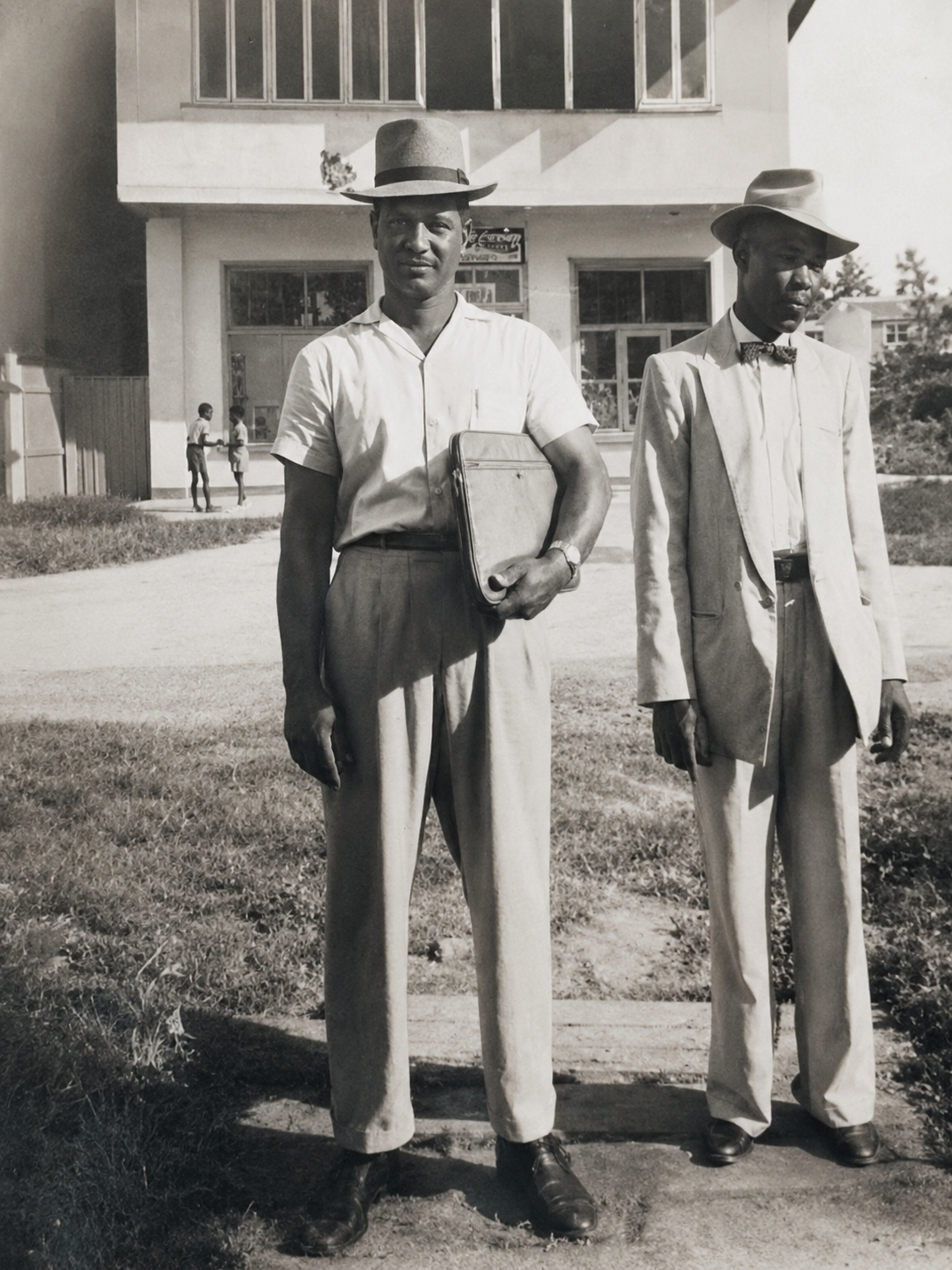
On board were around 400 British Indians, mostly men—the first of more than 34,000 migrants from India who arrived in Suriname between 1873 and 1916 through 64 ship transports. Ropar Pirtam, originally from the Azamgarh district, from the village of Farandhi, belonged to the Kohar caste and travelled under contract number FF1568. He was aboard the final ship that departed for Suriname. Pirtam was Andjennie’s great-grandfather.
Andjennie Cheng-A-June is a cultural activist, owner of DIG Advising, and a passionate Free Heri Heri volunteer. In conversation with Andjennie, we learn about her family history and, of course, the journey her great-grandparents made to Suriname.
Her family belongs to both the first and the last generations of migrants who settled in the district of Nickerie. They worked on rice, banana, and sugarcane plantations, including Plantation Waterloo, where Heri Heri—or Pharjam—was a breakfast meal: practical and nourishing, providing the energy needed for long hours of labour.
Plantation Waterloo no longer exists as a plantation, but today it is the location of Andjennie’s grandmother’s house. It is also the home where she spent her earliest years, before moving to the Netherlands with her parents in 1988.
“I always ate Pharjam as a child. My father, Sham Jonathan Pirtam Mehairjan, the grandson of Ropar Pirtam, learned it from my grandmother. Dad made it often, and to this day Pharjam is the dish that is always prepared whenever we need to bring something somewhere.
From long bus journeys to Spain to trips to the Efteling, my parents belong to that generation who would always prepare a food package ‘just in case.’ Something to bring when we arrived somewhere unfamiliar, or when we didn’t know what to expect. Maybe that is something deeply connected to the migrant experience.
As a child, I always thought that the Pharjam we ate was the Heri Heri. I didn’t know there were other variations, and I was unaware of its history until I encountered different versions later in life, including eating Heri Heri at friends’ homes.
The traditional version from the generations of enslaved people before my grandparents seems richer and more saucy. The salted cod (bakkeljauw) is served separately alongside the root vegetables, together with a boiled egg. Our Pharjam is drier, has no egg, is wok-fried as a single dish, and is easy to take with you and eat on the go.”
What makes Andjennie’s father’s version of Heri Heri so special is the way it continues to evolve while preserving the DNA of a practical and nourishing meal. At the same time, Pharjam became a dish designed to travel—from one place to another—and to be easily enjoyed along the way.
Perhaps less rich and saucy, but equally meaningful and uniquely shaped by the next generation of people who arrived in Suriname and helped form a new Surinamese culture.