

songs In key of women - a playlist that honors freedom fighters
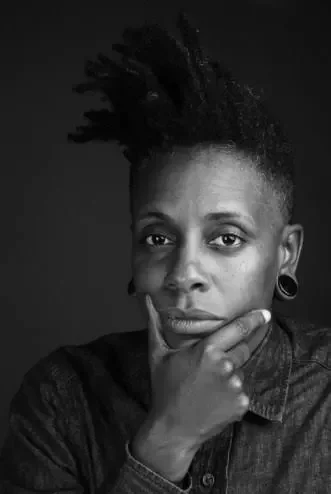
dj, scholar lynnée denise tell us how she arrived at her selection for the free heri heri playlist
“While curating Free Heri Heri in the Key of Women, I delved into some African, Caribbean, and Black American music archives and combed over music using a meticulous approach to craft this year's sound. I illuminated how our music practices traveled and connected over, underneath, and across the waters–through moving bodies, instruments, and speakers.
I demonstrated that songs, sounds, and rhythms migrate alongside recipes, hairstyles, and fashion. This mash-up of everyday rituals embodies our rich cultural histories. I have a history of listening to women artists and knowing that women’s voices are severely lacking globally in the library of Black music. However, that doesn't mean that they don't exist. As a DJ, this means that I feel responsible for excavating those voices, which is aligned with all of the work that I do in general–whether it's digging through literary archives or cinematic archives to find the voices of women who stood out, who were leaders across disciplines, but more specifically, who resisted, and who demonstrated and participated in acts of refusal through lyrics and songs.
This brings me to artists like Miriam Makeba, Busi Mhlongo, Queen Latifah, Denise Belfonc and Marcia Griffith. Given the fact that there is a gap in the music history of women’s sound, this playlist takes into consideration outstanding performances across generations and genres.
It also makes us reorient ourselves regarding who we frame and understand to be a warrior.
One question surfaced during this process, “What does it mean to be a woman in a male-dominated field and business industry?” While you may not have a history of political activism or be part of cultural resistance, there have been dire consequences for women who go up against the music industry machine.
Some of these women are Billie Holiday, Nina Simone, Whitney Houston, and even Amy Winehouse. All of them showed us how the music industry machine ate up their talents–and unfortunately resulted in premature death or robbed them of their sanity. Still, they left behind a testament to survival through songs in the form of music videos, albums, and even films.
I’ve also discovered a serious gap and lack of documentation regarding women in reggae and other forms of Caribbean music like Calypso and Kaseko. This brought me to Judy Mowatt, who was Bob Marley's backup singer. The phrase “back up,” is an understatement because nobody is just a backup singer for Bob Marley without contributing to the shaping of his entire sound.
I meditated on what I heard as an important charge—now that we know our mothers, sisters, aunties, and daughters have been buried under the community’s musical legacies, we are called to preserve the sounds that Black women make through song in our collective memory and then to pass the songs and sounds on from generation to generation. We must hold those songs within us, and if you think about how songs are passed down from the elder to the child, oftentimes, historically and across geographies, women are the first teachers. What became clear to me in this process is that Suriname has a rich music culture, and big bands, in particular, are a huge part of that culture. These bands often have at least ten to fifteen members; however, men's voices are mostly amplified. That said, it was with great honor to arrive at the catalog of Denise Jannah, the first Dutch woman of Surinamese descent signed to the prestigious New York-based Blue Note Records label. So moved by her songs, I kick off this playlist with her performance of “If the Music’s Right.” It’s a traditional jazz tune, which is important to mention because ‘jazz’ is a heavily male and American domain. Musically, Jannah expands what we know about Suriname and how its people embody diverse musical talents–producing and composing music associated with the country, but not limited to its music history. In “If the Music’s Right,” Jannah injects the genre with the rhythms of her culture.
She sings in three different languages and reminds us that her voice is also an instrument when improvising through scat. She is skilled in phrasing and precise in her movement in and around her fellow musicians.
For the younger warrior women, I stepped into the world of hip-hop from the UK’s Nigerian community. Thirty-year-old rapper Little Simz is a force on the mic and a lyricist of distinction. Following in the tradition of Fela Kuti and his feminist mother Funmilayo Ransome-Kuti, Little Simz’s confidence is at once a declaration of tradition and a vision for the future of African women. The song “SOS” encompasses UK house music, African drums, and Caribbean accents, much like the demographic of her city London. Her music and collaborations remind me of the spirit of Free Heri Heri, in how it has positioned Keti Koti as a multi-generational site of liberatory programming in the Netherlands, led by a new generation of Surinamese and Caribbean women.
The final song I’ll highlight is “Faluma.” Due to the fragmented archives of women performers,
I learned it was originally sung by the late and legendary Kaskawi singer Agnes Nagi also known as “Mama Agi or Sisa Agi” from Suriname, but it’s unclear what year she first recorded the music. Still, it was great to trace the pan-Caribbean movement of this folk tune. “Faluma” was first covered in 1989 by a Bajan group named Square One when Alison Hinds, known as the “Queen of Soca'' music, was one of its singers. Famously, Hinds sings the song in the (Saramaccan) of the Saamaka people– however resources have shared the original song sounds to be from the Ndyuka people or Aukan people (Okanisi), In 1998, “Faluma '' was covered again by Hinds gaining global attention. I was moved by the coming together of different countries through the song’s radical spirit. Sister Agnes Nagi and “Faluma” are from Suriname, Alison Hinds was born in London to parents from Barbados, and soca is a genre of music from Trinidad. This is nothing short of the Black Atlantic experience.
These musical mappings that come through women on the playlist who, regardless of where they stand politically, can and should be understood as warriors, have left me with hope and confidence.
It reminds us that if we don't listen to and seek out women who make music, we will continue to silence their voices and keep them relegated to memory, perpetuating systems that have kept their voices muted. If we don’t listen to women, we don’t hear ourselves”.
Find and follow DJ Lynnée Denise https://www.instagram.com/lynneedenise
Edited by Ayra A. Kip